Contemporary subterranean architecture. From the discreet entrance, the museum opens into dark, dramatic chambers carved into rock, so the reveal happens slowly rather than all at once.
Quick Information
ADDRESS
655 Main Rd, Berriedale TAS 7011, Australia
Timings
Closed today
TICKETS
From $104.80
NUMBER OF ENTRANCES
2
Did you know?
MONA opened to the public in 2011 on the site of David Walsh’s former Moorilla Museum of Antiquities.
Much of the museum is built underground into a sandstone escarpment, and visitors typically descend by spiral staircase or lift rather than starting at street level.
MONA deliberately avoids traditional wall labels. Artwork information comes through the O device or app, with text, audio, interviews and sometimes Walsh’s own commentary.
Is the Museum of Old and New Art (MONA) worth visiting?
Arrival is half the effect. You step off the ferry or down from the entry pavilion and then keep descending, deeper into sandstone, where the air cools, the light narrows, and the museum starts to feel more like a found space than a polite gallery.
David Walsh built MONA to unsettle the usual museum script. Instead of a neat timeline and obedient wall labels, you move through ancient artifacts, confrontational installations, and sudden river views using The O to decide how much context you want and when.
What stays with most visitors is not a single object but the feeling of having explored someone else’s brilliant, strange interior world. MONA permits you to be curious, amused, uncomfortable, and absorbed in the same hour.
Skip it if: explicit art, dark underground galleries, or long periods of walking and standing drain the pleasure from a visit.
What to see at Museum of Old and New Art (MONA)?
1/8
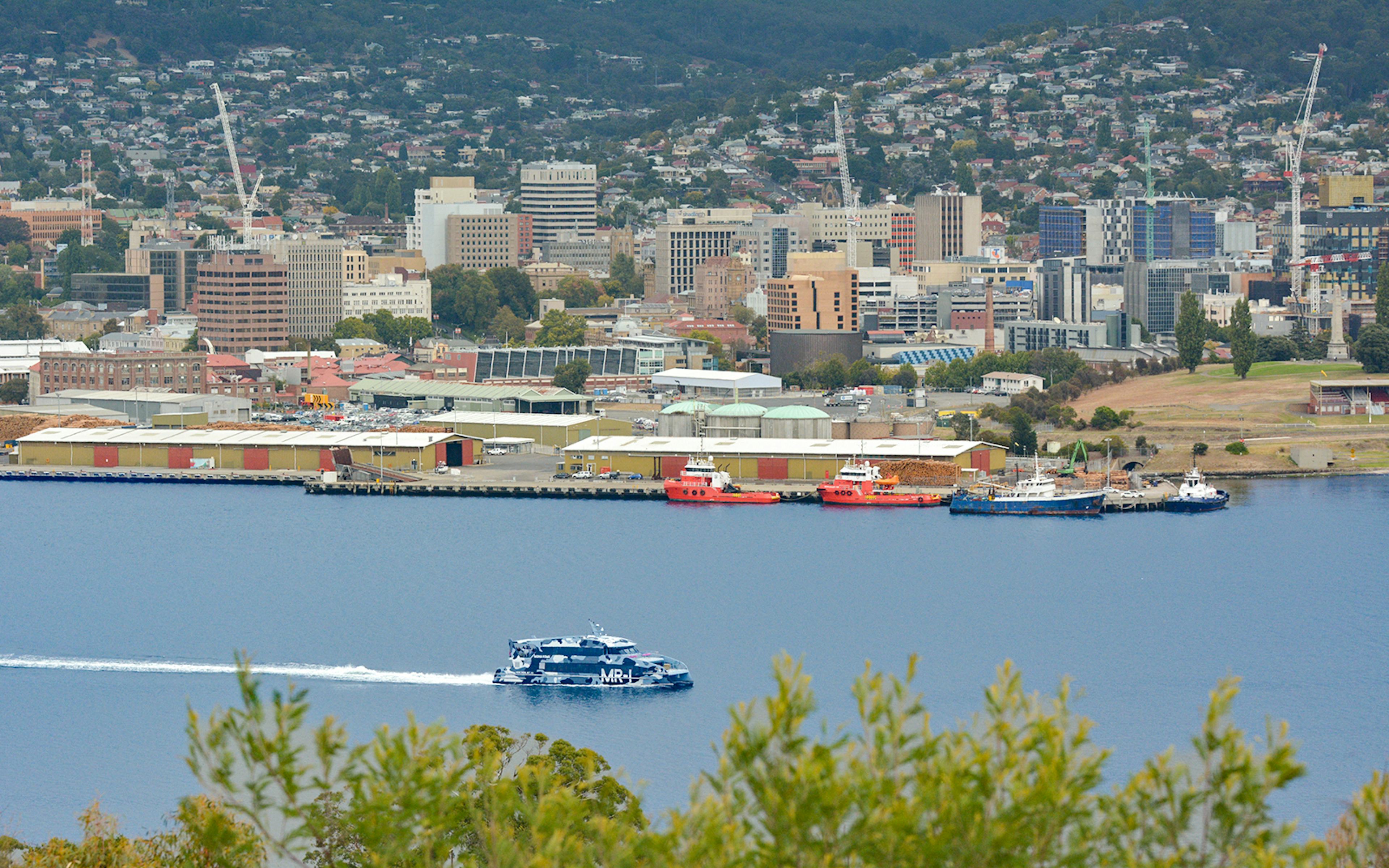
The ferry approach
The 25–30-minute ride up the Derwent sets the mood before you even enter. Standard seats give broad river views, while premium spots are limited on busy dates and are worth booking ahead.
Entry pavilion and descent
MONA reveals itself slowly. You enter through a restrained pavilion, then drop underground by staircase or lift into sandstone voids that immediately separate the museum from anything that feels conventional.
The lowest galleries
Start at the bottom and work up. These darker chambers hold some of MONA’s most confronting and immersive works, and the sense of scale is strongest before the upper levels begin to fill.
Old meets new
Ancient Egyptian, Greek, and Mesopotamian objects sit beside digital media, sculpture, and provocative contemporary installations. The contrast is the point: MONA wants you drawing your own connections across thousands of years.
The big installations
Give yourself time for sound works, moving-image pieces, and room-sized installations. They are easy to underestimate from the doorway, but many reveal themselves only if you stay for several minutes.
River views and courtyards
After long stretches underground, outdoor terraces and framed views of the Derwent reset your eye. They also make good breathing spaces if you need a break from the denser, more challenging galleries.
Moorilla and Moo Brew
The estate beyond the galleries is part of the day. Add a meal, wine tasting, or beer stop if you can spare 60–90 minutes; lunch reservations are smart on weekends.
The O digital guide
There are no wall labels beside the art. The O tracks where you are and gives commentary, context, and opinion on demand, which makes it essential rather than optional for first-timers.
How to explore the Museum of Old and New Art (MONA)
Budget your time: Plan 3–5 hours for the galleries, or 5–8 hours if you're arriving by ferry and stopping for lunch, wine tasting, or a visit to the brewery.
Suggested route: Start at the lowest gallery level and work your way up. Spend more time in the underground sandstone galleries, then take breaks in the outdoor courtyards or by the Derwent River before exploring the upper levels.
Must-see: The underground sandstone galleries, the striking mix of ancient and contemporary art, and at least one large-scale installation.
Optional: Visit Moorilla Winery, Moo Brew, or enjoy a meal at Faro or The Source. These experiences can add 1–2 hours to your visit.
Guided vs self-paced: A self-paced visit works well with The O, MONA's digital guide, which provides artwork information as you explore. Guided tours are ideal if you're combining MONA with other Hobart attractions like Mount Wellington or a city tour.
Brief history of Museum of Old and New Art (MONA)
- Late 20th century: David Walsh began building the private collection that would later become MONA, shaped by his interest in antiquities, contemporary art, and difficult human questions.
- 2000s: Plans took shape for a museum at Moorilla Estate in Berriedale, with a design that buried much of the building inside the sandstone cliff above the Derwent.
- January 2011: MONA opened to the public and immediately altered Hobart’s cultural profile, drawing national and international attention to Tasmania.
- 2010s: The museum expanded its reach through rotating exhibitions, ferry arrivals, dining venues, and major events that encouraged repeat visits.
- Today: MONA remains Australia’s largest privately funded museum and Tasmania’s defining paid cultural attraction, with a collection and program that continually changes.
Who built the Museum of Old and New Art (MONA)?
MONA was commissioned by David Walsh, who wanted a museum that provoked rather than instructed. Fender Katsalidis Architects, led by Nonda Katsalidis, answered with a cliff-carved, subterranean building that makes descent, disorientation, and discovery central to the experience from the first step underground.
Architecture of the Museum of Old and New Art (MONA)
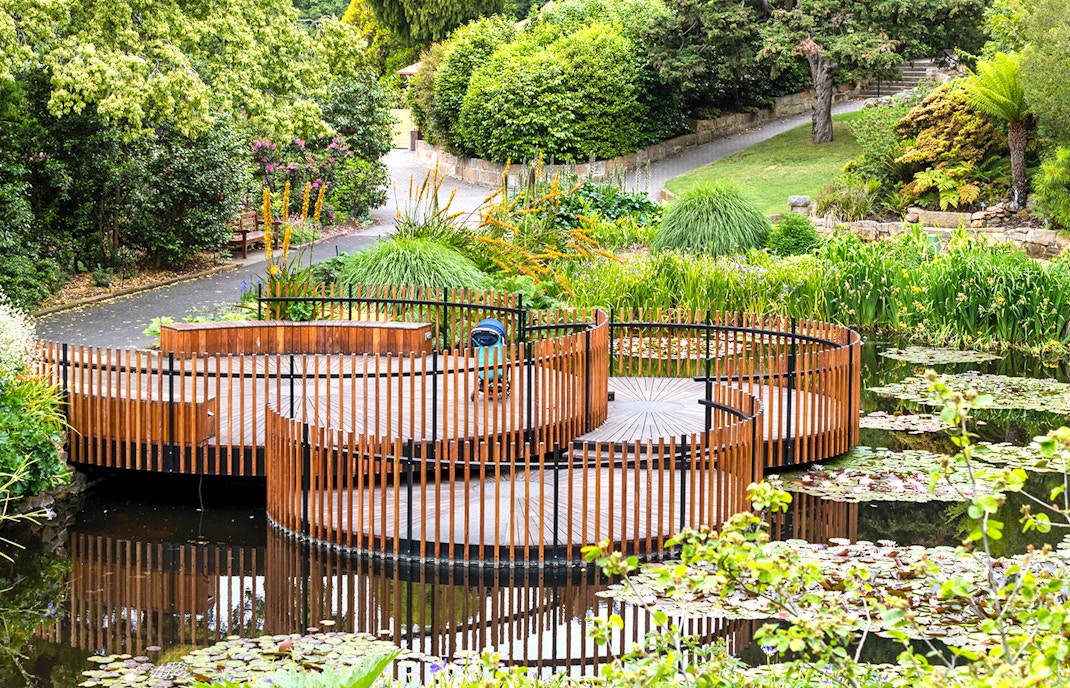
Style
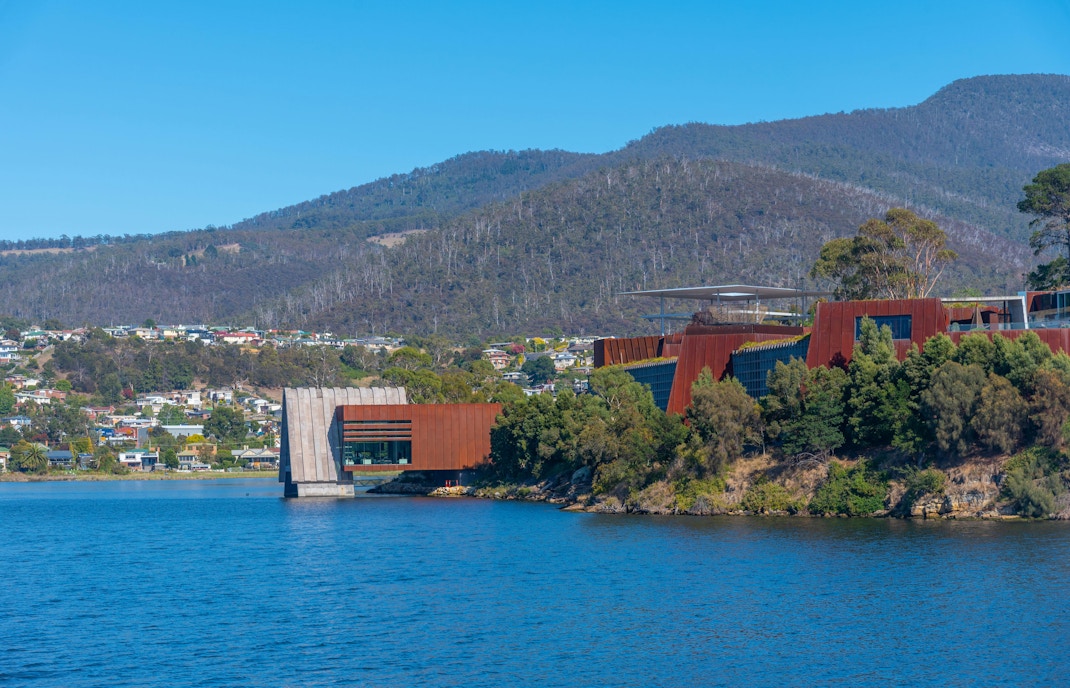
Materials
Triassic sandstone, exposed concrete, steel, and glass dominate. You see raw cliff faces beside smooth walkways and water features, which keeps the galleries feeling part bunker, part excavation.
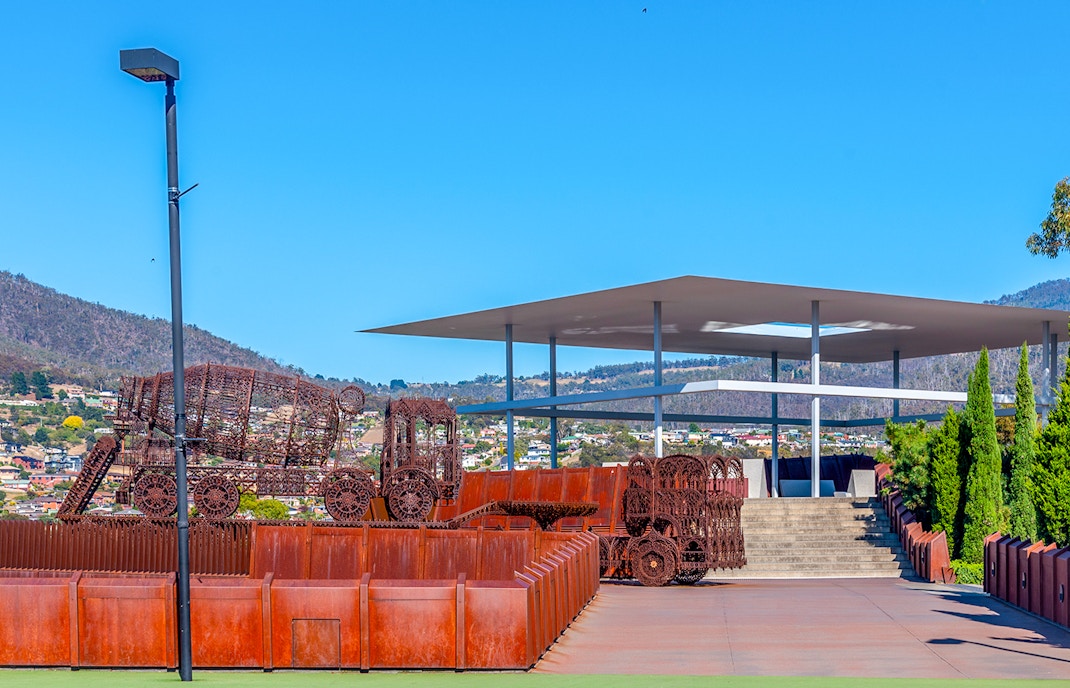
Engineering
Most of MONA sits three levels below ground beneath Moorilla Estate. Bridges, staircases, shafts, and lifts thread through the excavated voids, turning circulation into a vertical journey.
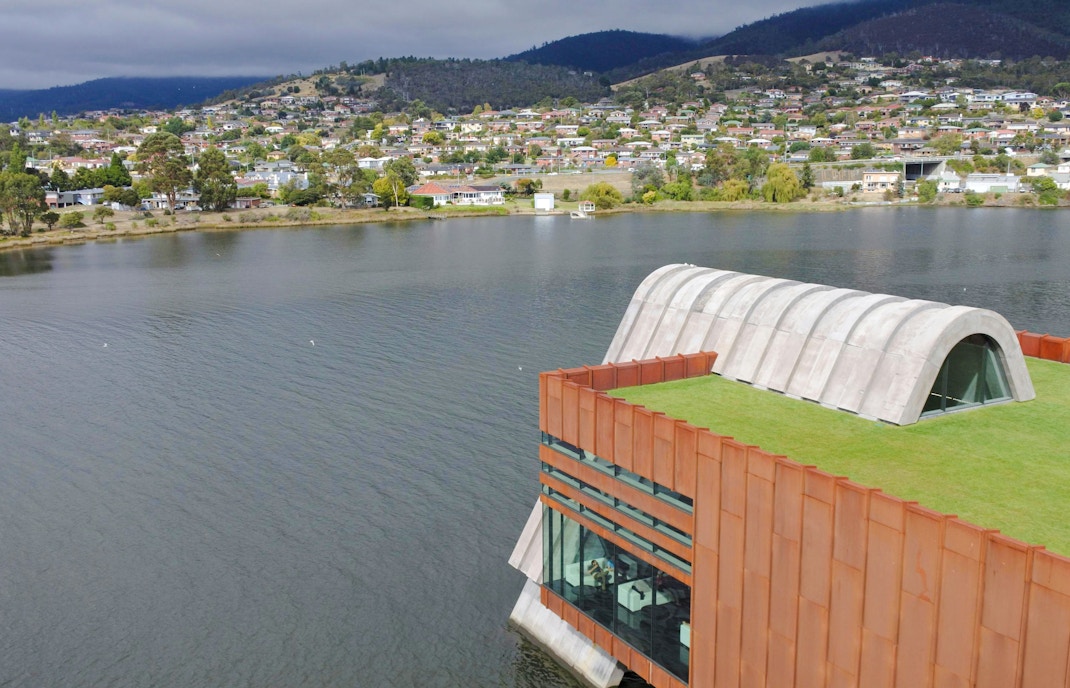
On the ground
The lack of daylight in some chambers and sudden openings to river views sharpen the contrast between intimacy and scale. You’re constantly recalibrating where you are.
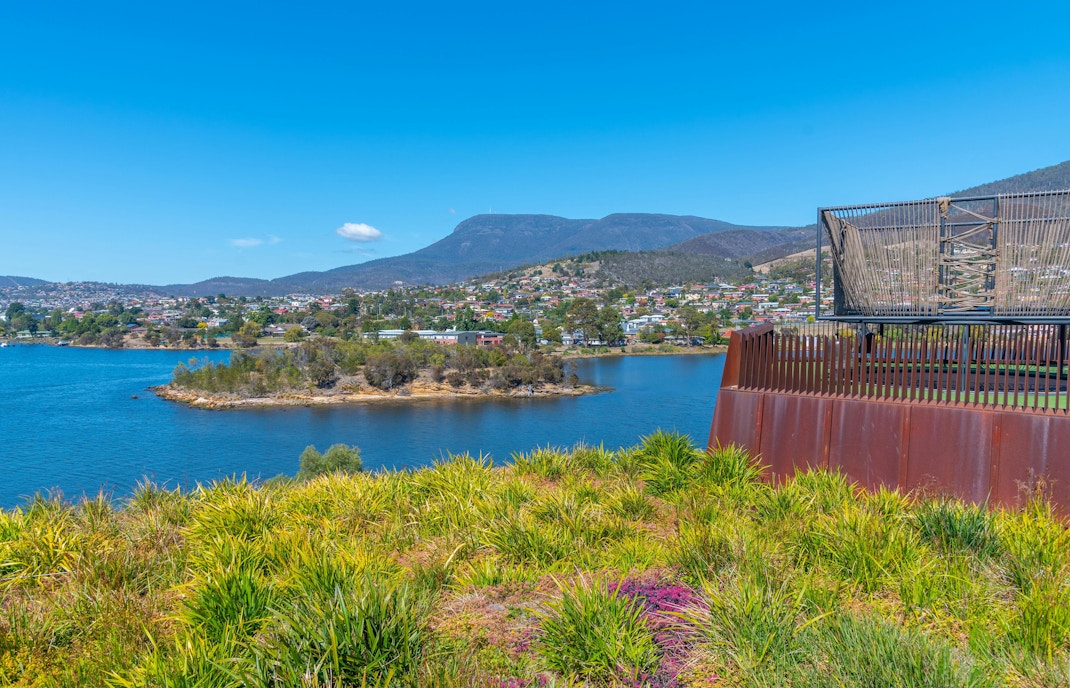
Architect
Fender Katsalidis Architects, with Nonda Katsalidis, designed the museum to resist the polite neutrality of standard galleries and make the building an active part of the art encounter.
Additional information about the Museum of Old and New Art (MONA)
Before MONA opened, Hobart was better known for heritage streetscapes, waterfront scenery, and access to wilderness. MONA gave the city a sharper international identity: contemporary, provocative, and culturally ambitious. It also changed travel patterns. Many visitors now build at least one full day of a Hobart trip around the museum, then extend their stay for restaurants, festivals, and nearby attractions. That shift matters because MONA is not just a successful museum; it is one of the clearest examples in Australia of a single attraction reshaping a destination’s tourism economy.
Frequently asked questions about MONA
Yes, especially if you want a museum that feels closer to an experience than a checklist. The architecture, ferry arrival, and shifting exhibitions justify the time.
Most visits take 3–5 hours. If you add the ferry, a proper lunch, or time at Moorilla Winery and Moo Brew, plan on 5–8 hours so the day does not feel rushed.
Don’t skip the descent into the underground galleries, the old-versus-new juxtapositions, and one large installation you stay with longer than expected. If you arrive by river, the ferry approach adds a strong sense of occasion before entry.
Yes for first-timers and for families with older children. Some works are explicit, dark, or conceptually heavy, so it suits curious teens better than young kids. The ferry and open grounds help break up the visit.
By ferry, if you have the time. It turns the trip into part of the experience and drops you close to the entrance.
Yes, especially for weekends, school holidays, festival periods, and ferry-inclusive visits. Ferry capacity is limited, and popular time slots go first.


